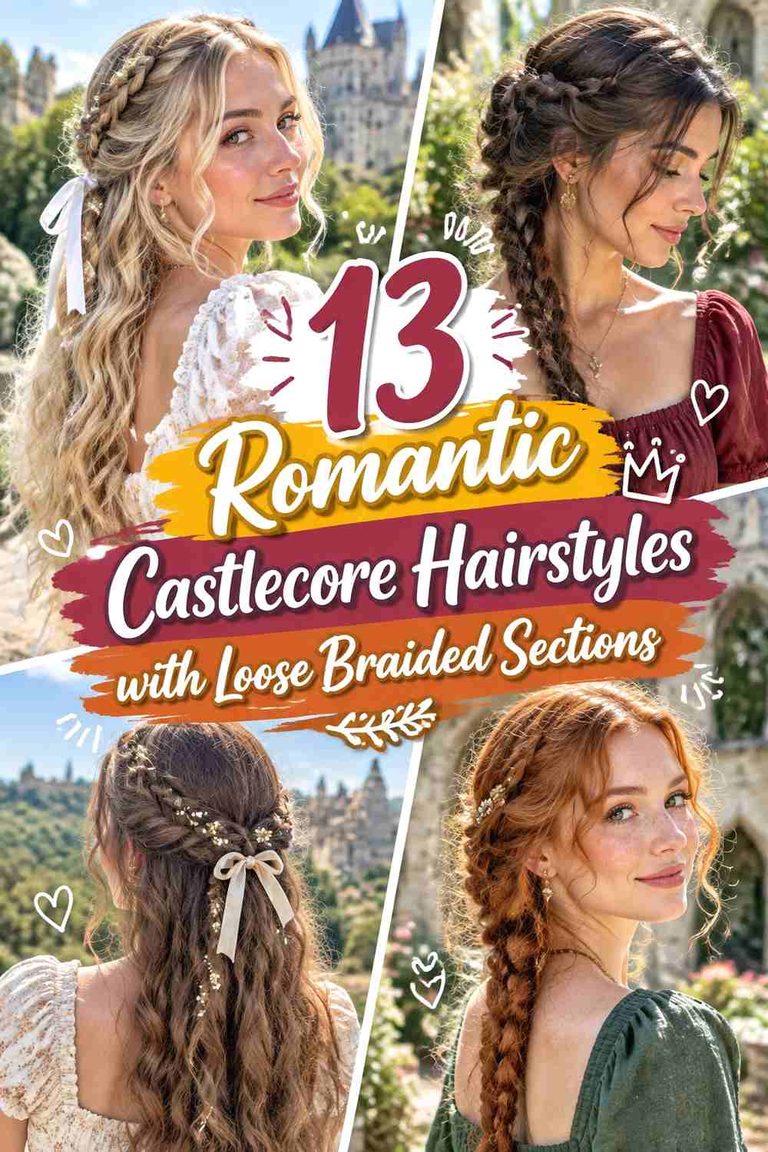
18 Romantic Tudor Braid Hairstyles with Loose Crown Sections
Soft crown volume, woven braids, ribbons, pearls, and flowing lengths give these Tudor-inspired hairstyles a romantic historical mood with an easy modern finish.
Tudor-inspired braids become much more wearable when the crown is left soft rather than tightly pulled against the scalp. A little looseness through the top creates natural volume and movement, while braids placed around the sides, back, or lower crown provide the structured detail associated with historical styling.
Modernizing the look is mostly about proportion. Instead of heavily wrapping every section, these hairstyles combine selective braiding with loose lengths, face-framing strands, subtle waves, and relaxed texture. Consider your hair density, available length, desired hold, and how much crown volume feels comfortable before choosing a version.
Quick List
- Soft Center Part Tudor Braid Hairstyle
- Loose Crown Tudor Braid Hairstyle
- Half Up Tudor Braid Hairstyle
- Ribbon Woven Tudor Braid Hairstyle
- Pearl Pinned Tudor Braid Hairstyle
- Side Part Tudor Crown Braid Hairstyle
- Double Side Tudor Braid Hairstyle
- Low Wrapped Tudor Braid Hairstyle
- Face Framing Tudor Braid Hairstyle
- Long Loose Length Tudor Braid Hairstyle
- Soft Brunette Tudor Braid Hairstyle
- Golden Tudor Braid Hairstyle
- Copper Tudor Braid Hairstyle
- Fine Hair Tudor Braid Hairstyle
- Thick Hair Sculpted Tudor Braid Hairstyle
- Tousled Tudor Crown Braid Hairstyle
- Low Bun Tudor Braid Hairstyle
- Romantic Loose Crown Tudor Braid Hairstyle
1. Soft Center Part Tudor Braid Hairstyle
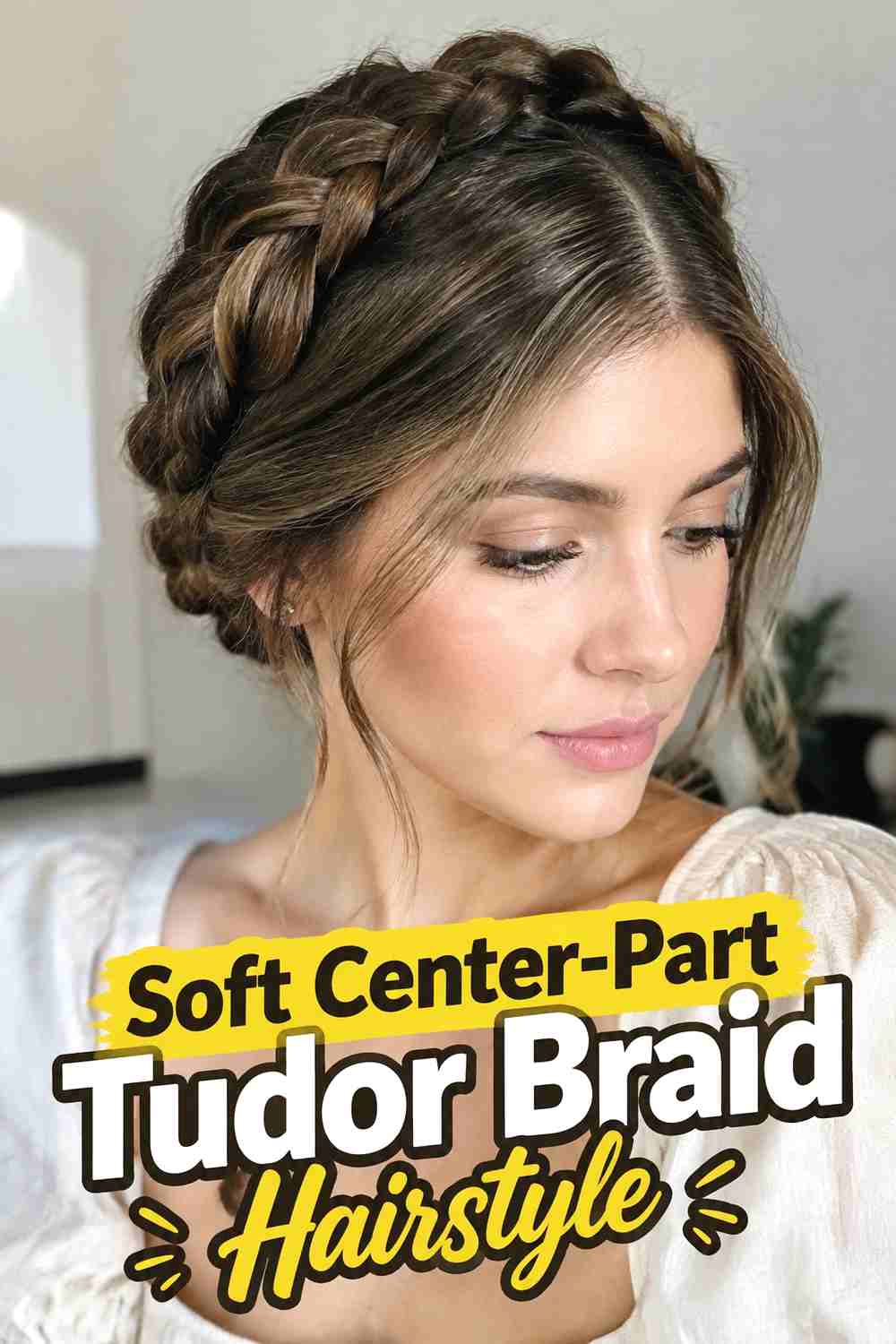
A soft center part gives this Tudor-inspired braid a balanced, portrait-like shape without making the crown look severe. Leave a little lift on either side of the part, then guide small sections toward the back before incorporating them into loose braids. The crown should retain natural movement rather than being slicked flat, and a few shorter strands can remain free near the temples. The lower lengths may be softly waved or gently textured so the braided detail blends into the rest of the hair. This style works especially well on medium-long and long hair, where there is enough length to create visible braiding while still leaving a romantic amount of hair loose.
Styling Notes
Establish the center part before braiding and avoid pulling the first few crossings too tightly. Gentle tension helps maintain crown softness.
Best For
Choose this look if you want Tudor influence that remains symmetrical, understated, and easy to adapt for modern occasions.
2. Loose Crown Tudor Braid Hairstyle
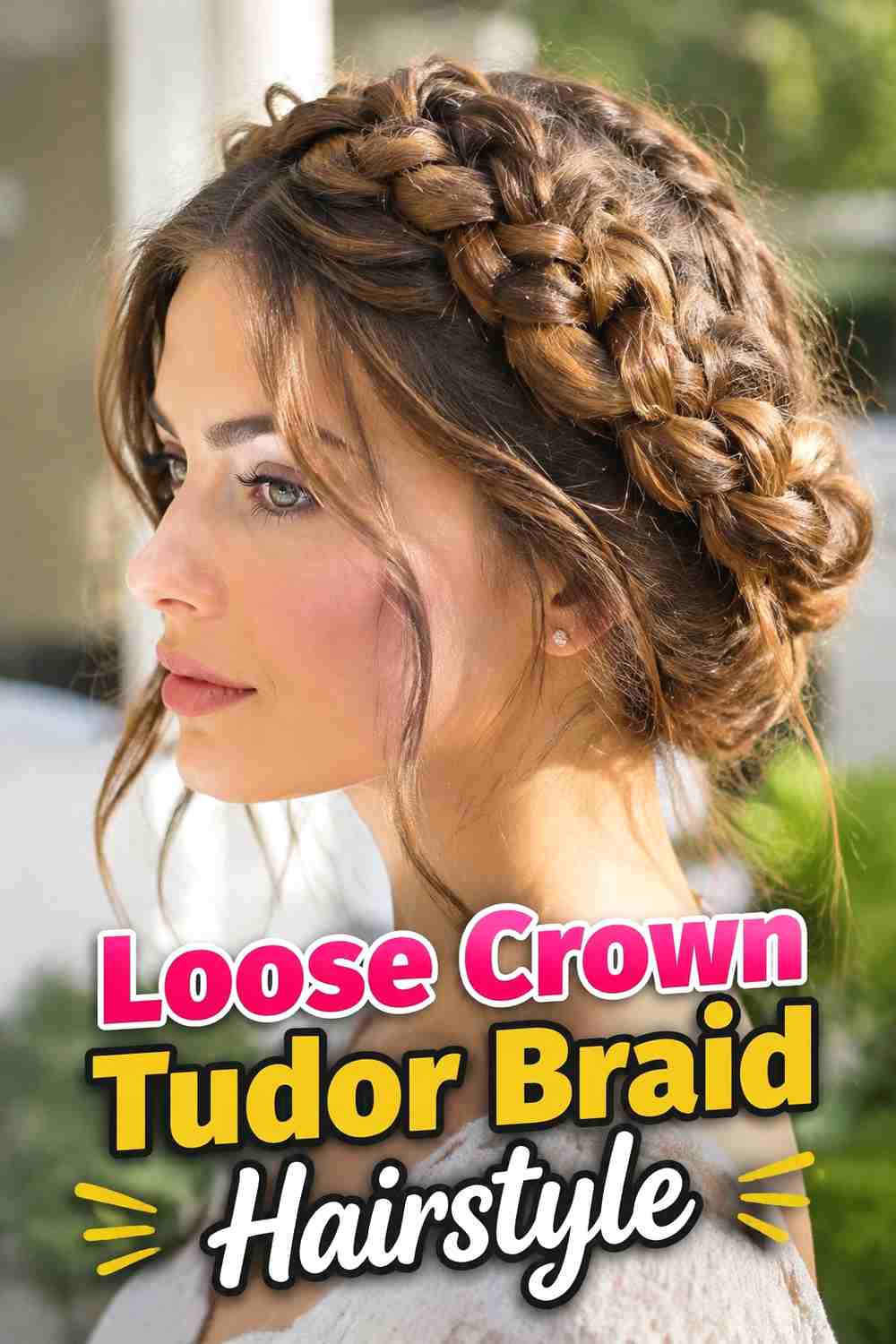
This version makes crown softness the main feature. Instead of smoothing every strand tightly into the braid, gently lift the upper sections and allow a little natural fullness before weaving the sides toward the back. The braid itself can sit below the fullest part of the crown so the top retains a rounded but relaxed silhouette. Loose pieces around the hairline add movement and stop the style from feeling overly formal. The remaining lengths can fall in subtle waves or natural texture. This approach is especially flattering when the goal is romantic volume rather than a sharply sculpted historical shape, and it can be adjusted easily depending on how much lift your hair naturally holds.
Styling Notes
After securing the braid, gently loosen small sections at the crown with your fingertips instead of pulling on the braid itself.
Wear & Maintenance
Use flexible hold around the crown so the volume stays touchable. Heavy spray can make the loose sections look stiff.
3. Half Up Tudor Braid Hairstyle
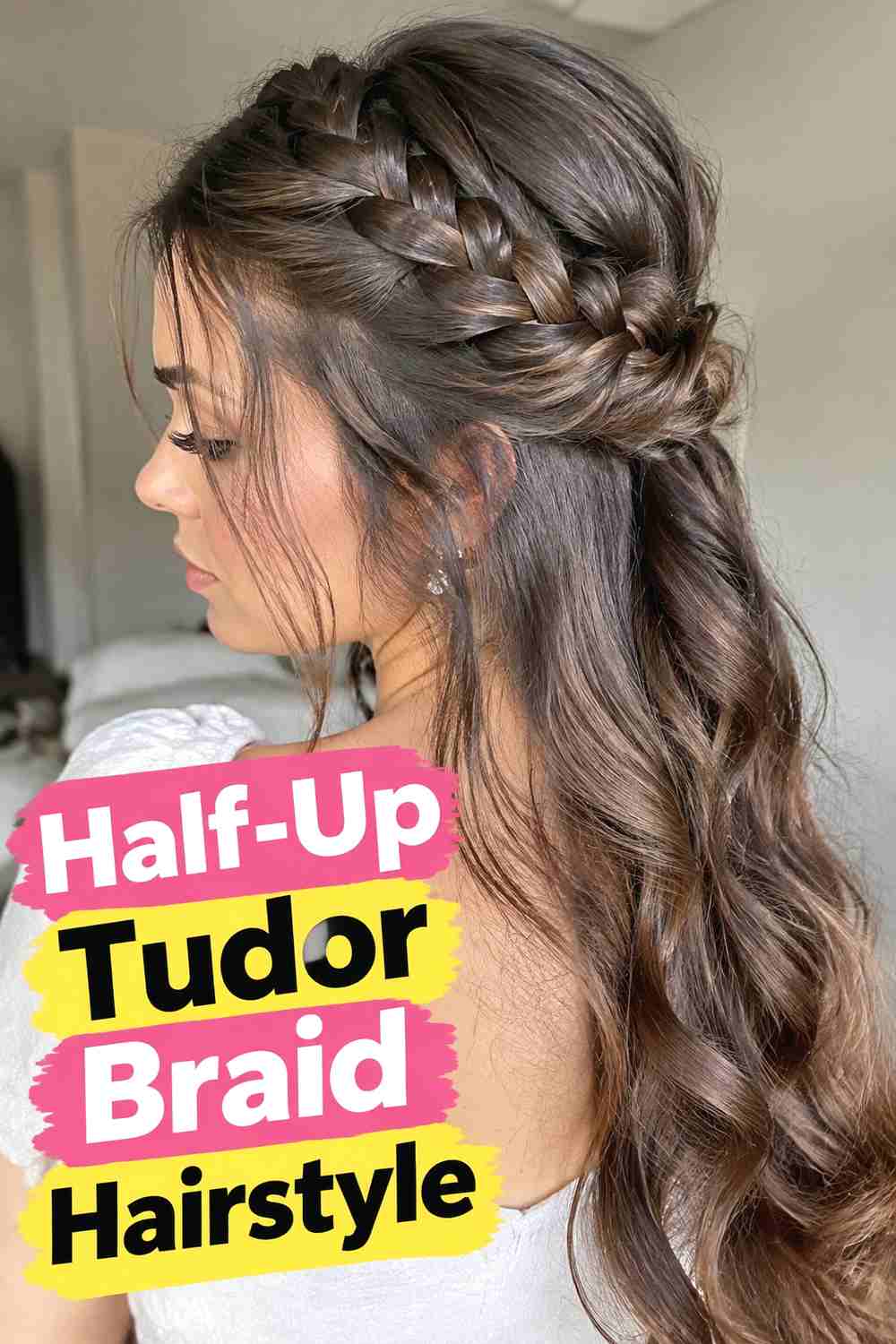
A half-up Tudor braid combines historical structure with plenty of flowing hair. Small sections from each side are braided toward the back and joined below a softly lifted crown, leaving the majority of the hair loose. This arrangement gives the style a clear braided focal point without hiding the natural length or texture. The crown should feel slightly airy, with enough looseness to prevent the sides from looking tightly stretched. Long waves, natural curls, or softly straightened lengths can all work underneath. Because the upper portion is secured, the hairstyle also keeps hair away from the face while maintaining a romantic, unfussy appearance from the back.
Best For
This style suits weddings, dinners, outdoor events, portraits, or everyday looks when you want decorative braiding without committing to a complete updo.
Pro Tip
Hide a small elastic beneath the joined braids if extra support is needed, then wrap a strand over it for a cleaner finish.
4. Ribbon Woven Tudor Braid Hairstyle
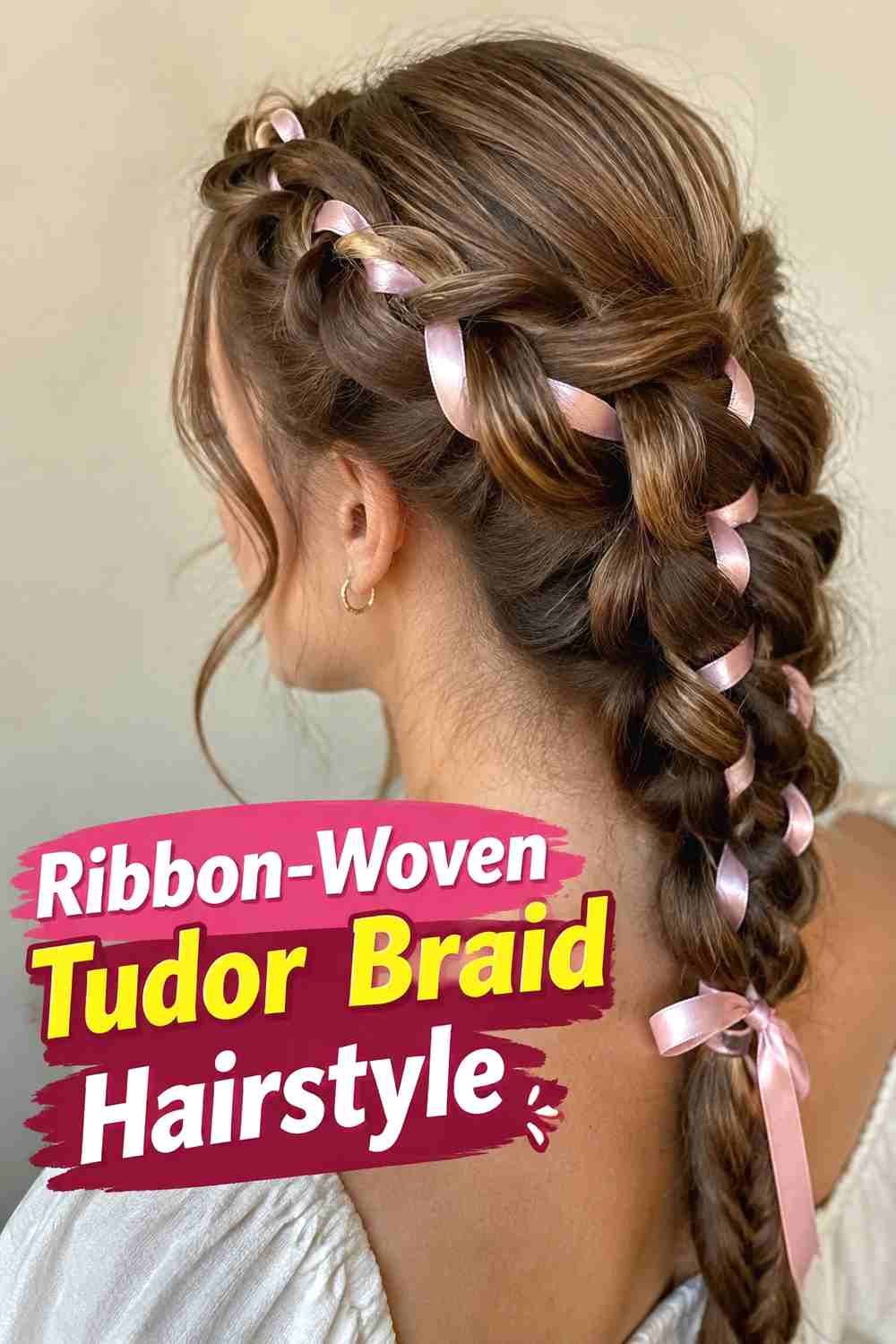
A narrow ribbon woven through the braid gives this hairstyle a stronger Tudor-inspired character while a loose crown keeps it contemporary. Start with softly lifted roots and braid one or both side sections toward the back, feeding a slim ribbon through selected crossings rather than wrapping every section densely. The remaining hair can stay loose and slightly waved to create contrast with the decorative braid. Velvet has a richer historical feel, while satin or matte ribbon gives the look a lighter finish. Keep the ribbon narrow enough that the braid texture remains visible. Cream, burgundy, dusty rose, muted gold, forest green, and deep blue can all complement this romantic styling direction.
Styling Notes
Anchor the ribbon discreetly near the braid’s starting point so it does not slide as you weave. Keep the tension even but not tight.
Wear & Maintenance
Secure the ribbon independently from the braid’s main elastic so it can be adjusted without loosening the entire hairstyle.
5. Pearl Pinned Tudor Braid Hairstyle
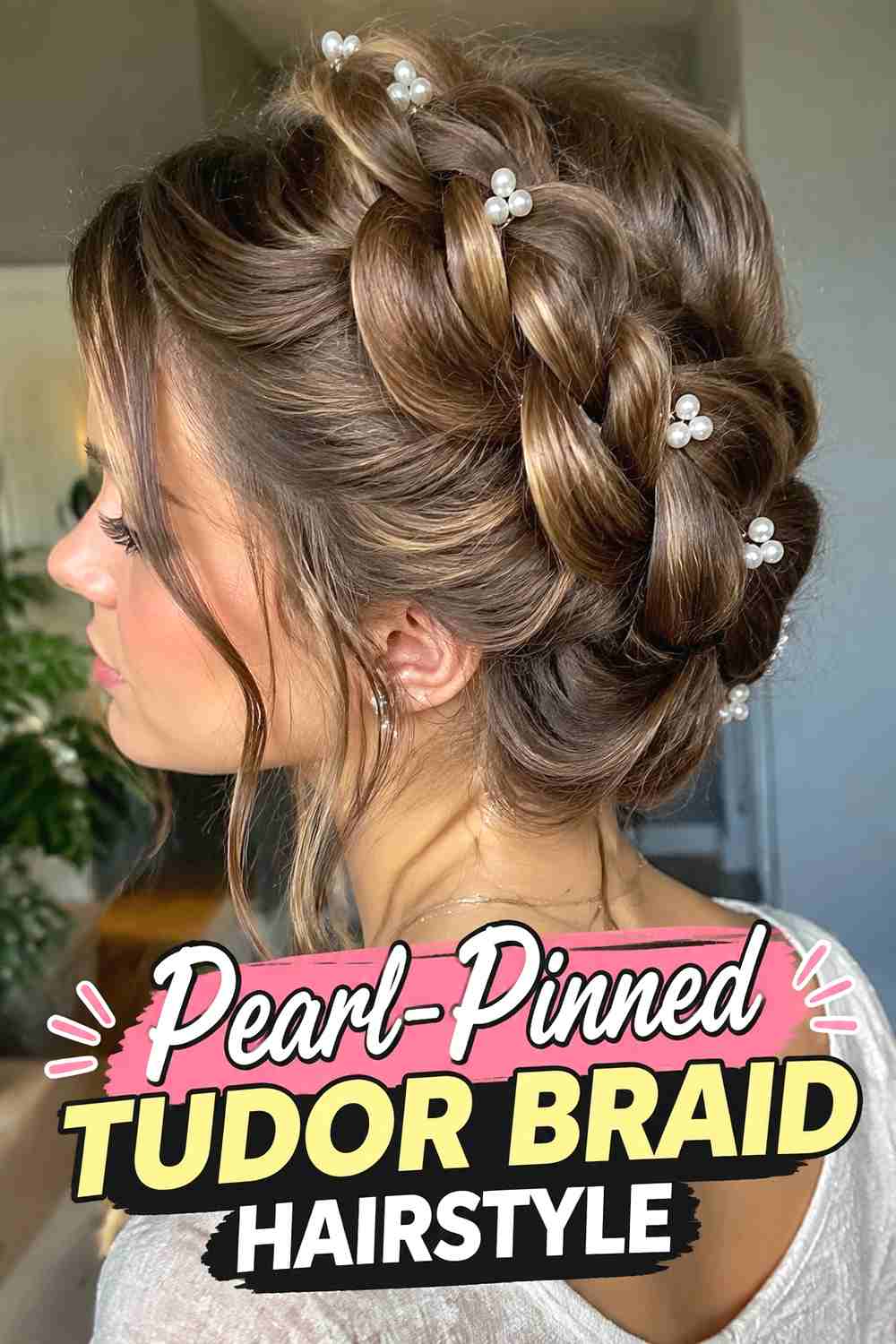
Pearl pins add delicate detail to a Tudor braid without requiring a heavily embellished finish. Create a relaxed braid across the back or around part of the crown, then place a few pearls between selected sections instead of covering the entire braid. Keeping the top loose provides a soft transition from the hairline into the woven area, while wispy pieces near the temples can make the style feel more natural. The remaining lengths may stay down or be lightly gathered, depending on the occasion. Small, spaced accessories generally look more refined than a dense row of pearls because the braid pattern and individual strands remain clearly visible.
Best For
This variation works particularly well for bridal events, formal dinners, romantic portraits, and celebrations where subtle ornamentation feels appropriate.
Pro Tip
Support heavier pearl pins with hidden bobby pins underneath so they do not pull on individual braided sections.
6. Side Part Tudor Crown Braid Hairstyle
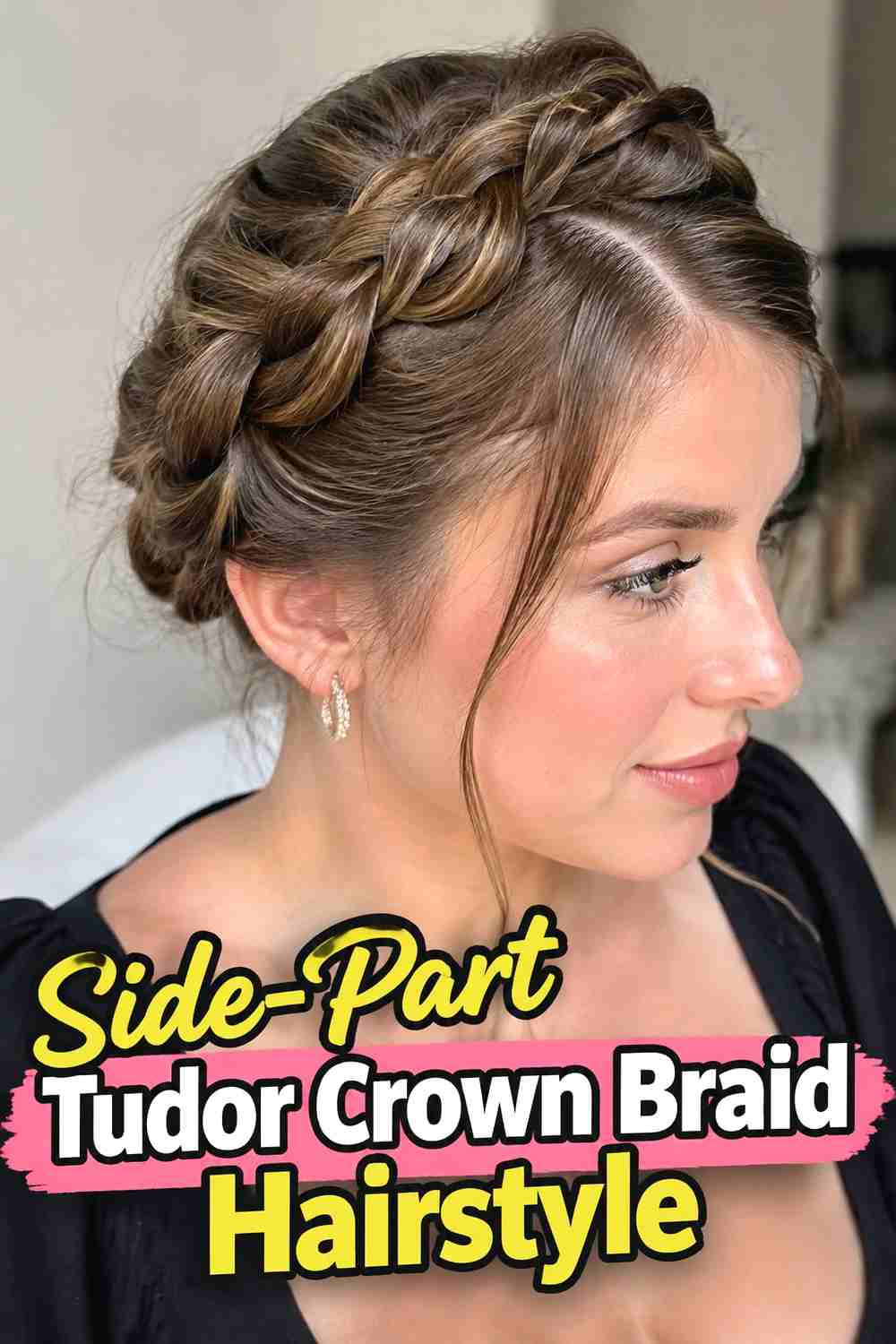
A side part creates an asymmetrical Tudor braid that feels softer and more modern than a perfectly centered arrangement. Leave some volume over the fuller side, then begin the braid slightly away from the hairline so the crown remains loose. The braided section can travel around the back of the head while the smaller side is gently tucked or incorporated later. A few face-framing strands keep the front from appearing too controlled. This style looks especially attractive in profile because the fuller crown transitions gradually into the braid. Keeping the ends soft, whether loose or partially pinned, helps balance the stronger structure around the upper sides.
Styling Notes
Set your part before creating crown volume. Moving it afterward can flatten the lifted sections and disturb the direction of the braid.
Why It Works
The uneven distribution of volume adds visual movement and prevents the historical inspiration from feeling overly symmetrical or rigid.
7. Double Side Tudor Braid Hairstyle
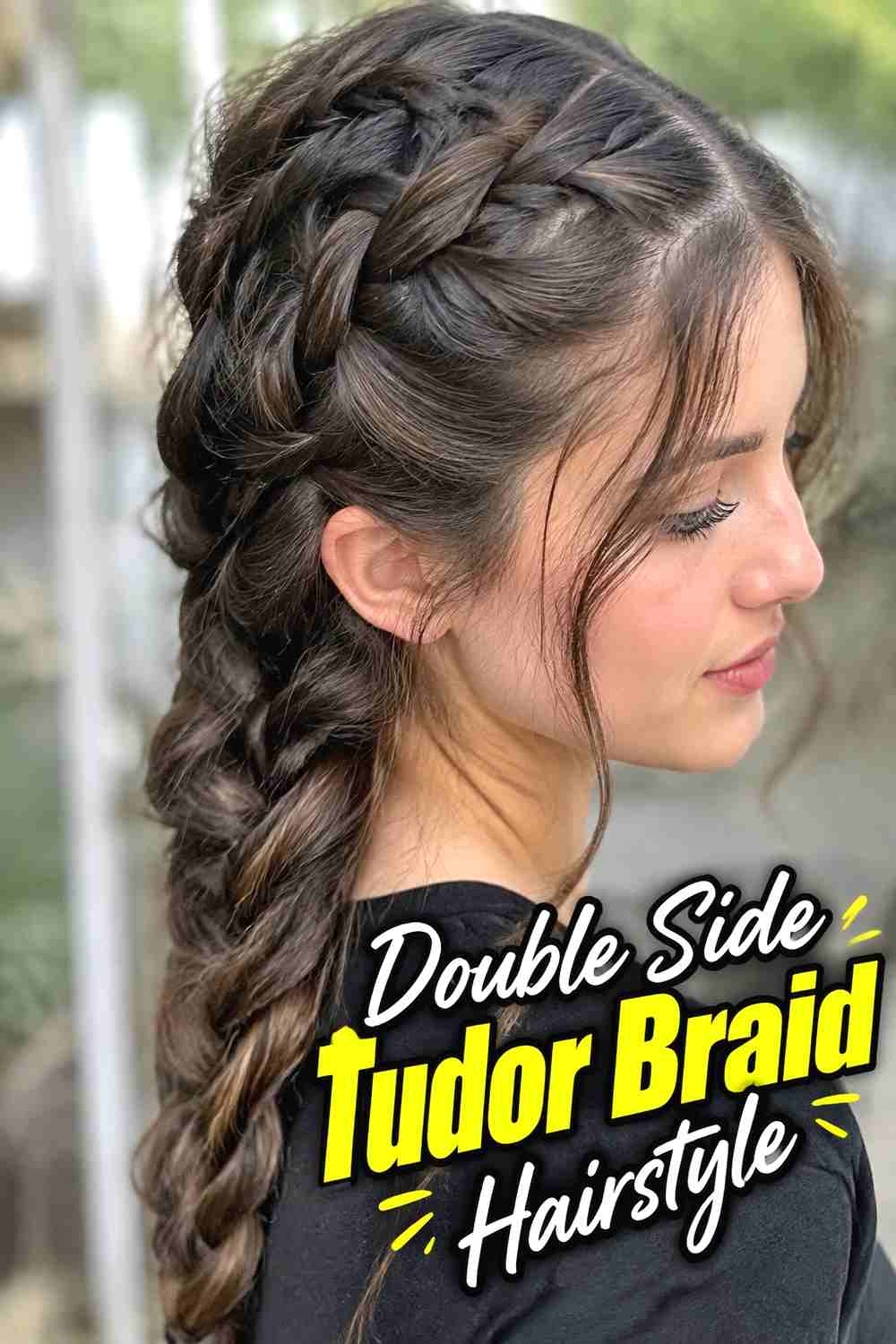
Two side braids create stronger Tudor-inspired detail while leaving the crown pleasantly relaxed. Begin with separate sections near each temple and braid them backward, keeping the first few crossings loose enough to preserve softness around the hairline. The braids can meet at the back or continue independently along the sides before being pinned underneath the upper layers. Leave the central crown section slightly lifted so the overall shape has height without excessive teasing. The lower lengths can remain loose in natural waves or gentle bends. This arrangement is especially useful on dense hair because it distributes the braided detail across both sides instead of concentrating too much hair in one heavy section.
Hair Type & Length
Medium-long and long hair provide enough length for two distinct braids. Dense hair can produce substantial braids, while finer hair benefits from gently loosening each woven section.
Wear & Maintenance
Secure both sides independently before connecting them. This reduces tension and helps prevent one braid from pulling the other out of position.
8. Low Wrapped Tudor Braid Hairstyle
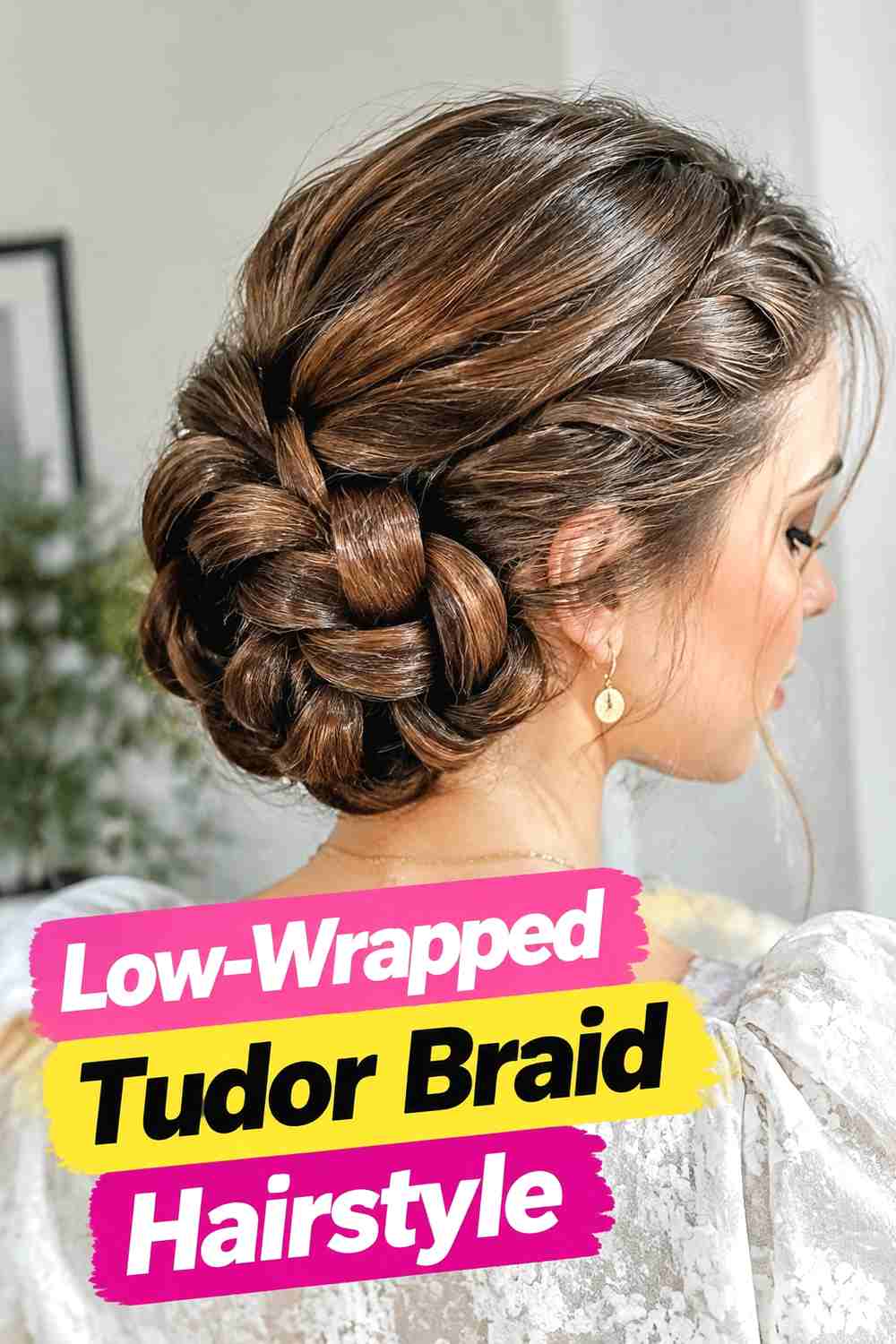
A low-wrapped braid shifts the visual weight toward the nape, leaving the crown airy and softly rounded. Side sections are braided with moderate tension, then guided around the lower back of the head and secured in a curved shape rather than stacked into a compact bun. The top remains intentionally loose, and small pieces can fall around the temples or ears for added softness. This placement works well when you want a historical-inspired silhouette without excessive volume near the top. The wrap can be neat for formal occasions or gently loosened for a more relaxed appearance. From the back, the braid creates a clear decorative line while still feeling comfortable and understated.
Styling Notes
Create the crown volume before wrapping the braid. Once the lower section is pinned firmly, lifting the upper hair becomes more difficult.
Best For
Choose this option for a secure style that keeps most of the hair off the neck while maintaining romantic softness above.
9. Face Framing Tudor Braid Hairstyle
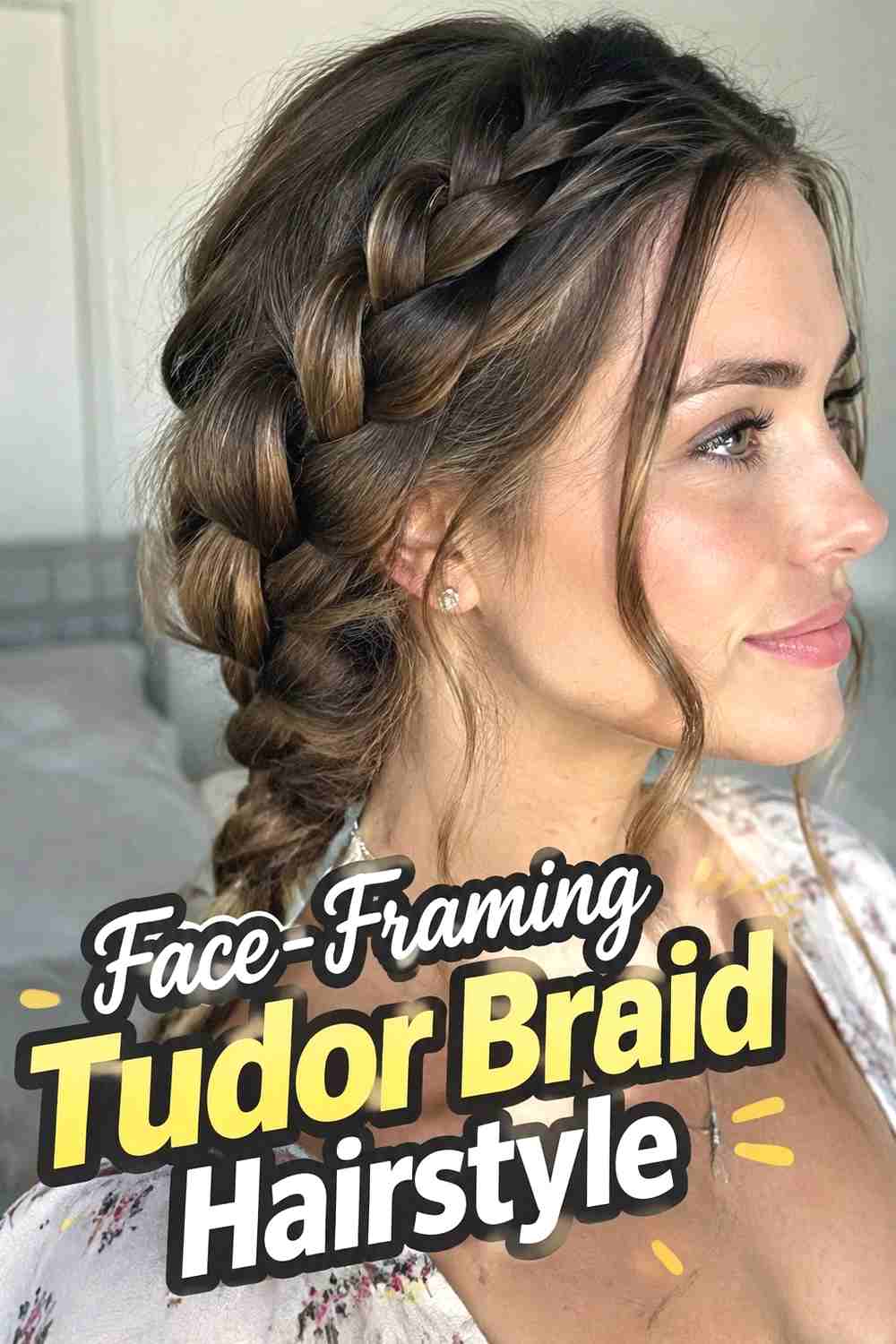
Face-framing pieces soften a Tudor braid immediately, especially when the braid itself has a structured placement around the sides or back. Leave a few natural strands free near the temples, cheekbones, or jaw before beginning the braid. These pieces should vary slightly in length and shape instead of appearing like identical curled tendrils. Behind them, keep the crown gently lifted so the front sections blend naturally into the hairstyle. The braid can be half-up or partially wrapped, depending on how much hair you want to leave loose. This approach is particularly useful for anyone who enjoys historical-inspired styling but prefers a relaxed, flattering front rather than a completely exposed hairline.
Styling Notes
Separate the face-framing pieces before braiding so you do not have to pull them out afterward and accidentally loosen the woven sections.
Pro Tip
Style the front strands with softer bends than the rest of the hair so they move naturally instead of forming tight ringlets.
10. Long Loose Length Tudor Braid Hairstyle
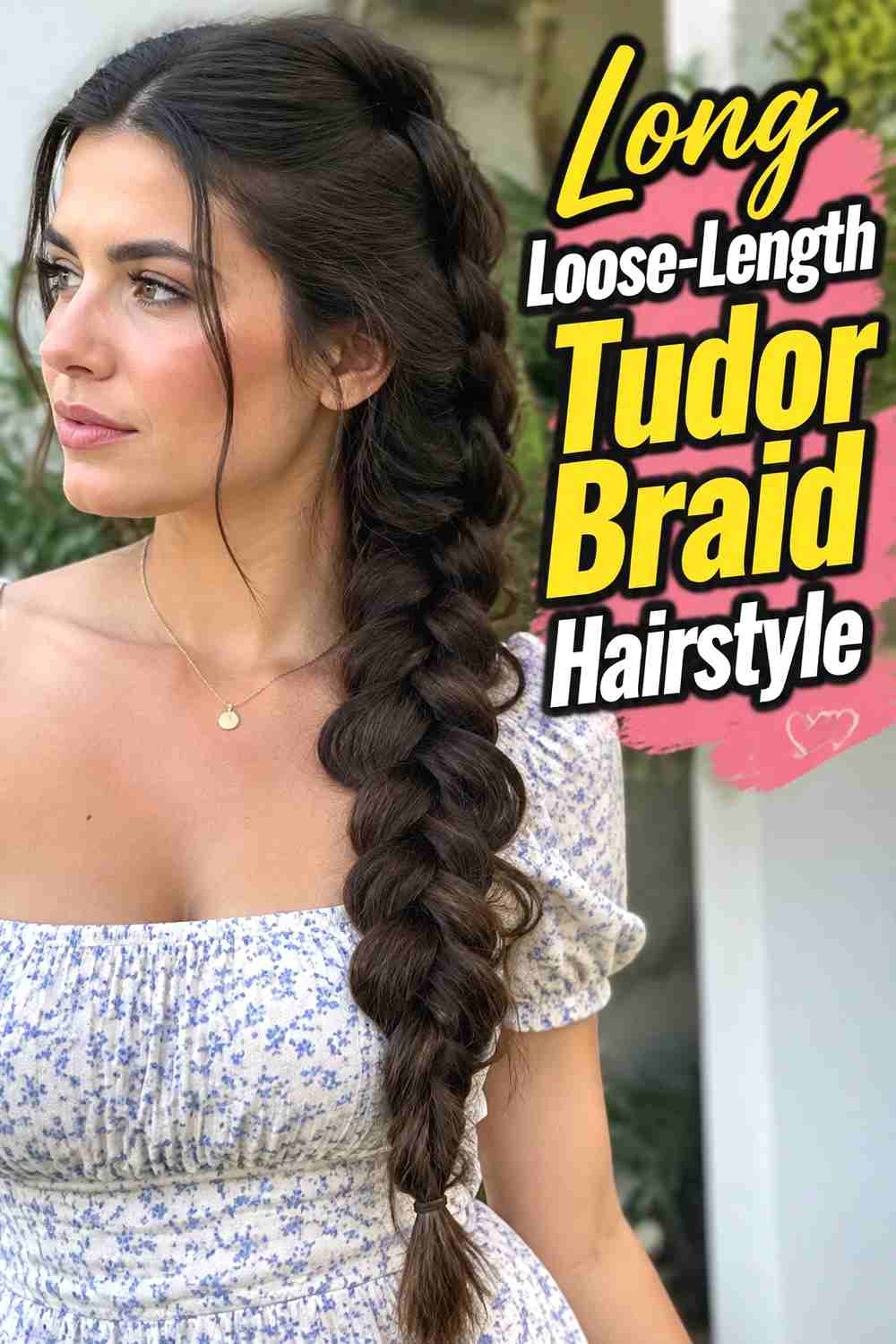
Very long hair creates a dramatic contrast between a detailed Tudor braid and flowing lower lengths. Keep the upper braid relatively narrow and place it across the back or around the sides so the crown remains loose. Below it, allow the hair to fall freely in long waves, soft curls, or natural texture. The braid provides visual structure without consuming too much of the overall length, making this style ideal when you still want the hair to look long from behind. Slight volume at the crown helps connect the braided section to the cascading lengths. Keeping the ends soft and separated prevents the hairstyle from becoming too heavy or overly formal.
Hair Type & Length
Long to very long hair shows this contrast most clearly. Thick hair may need smaller braid sections so enough length remains loose underneath.
Wear & Maintenance
Use hidden pins where the braid meets the loose hair and avoid excessive spray through the lower lengths so they retain natural movement.
11. Soft Brunette Tudor Braid Hairstyle
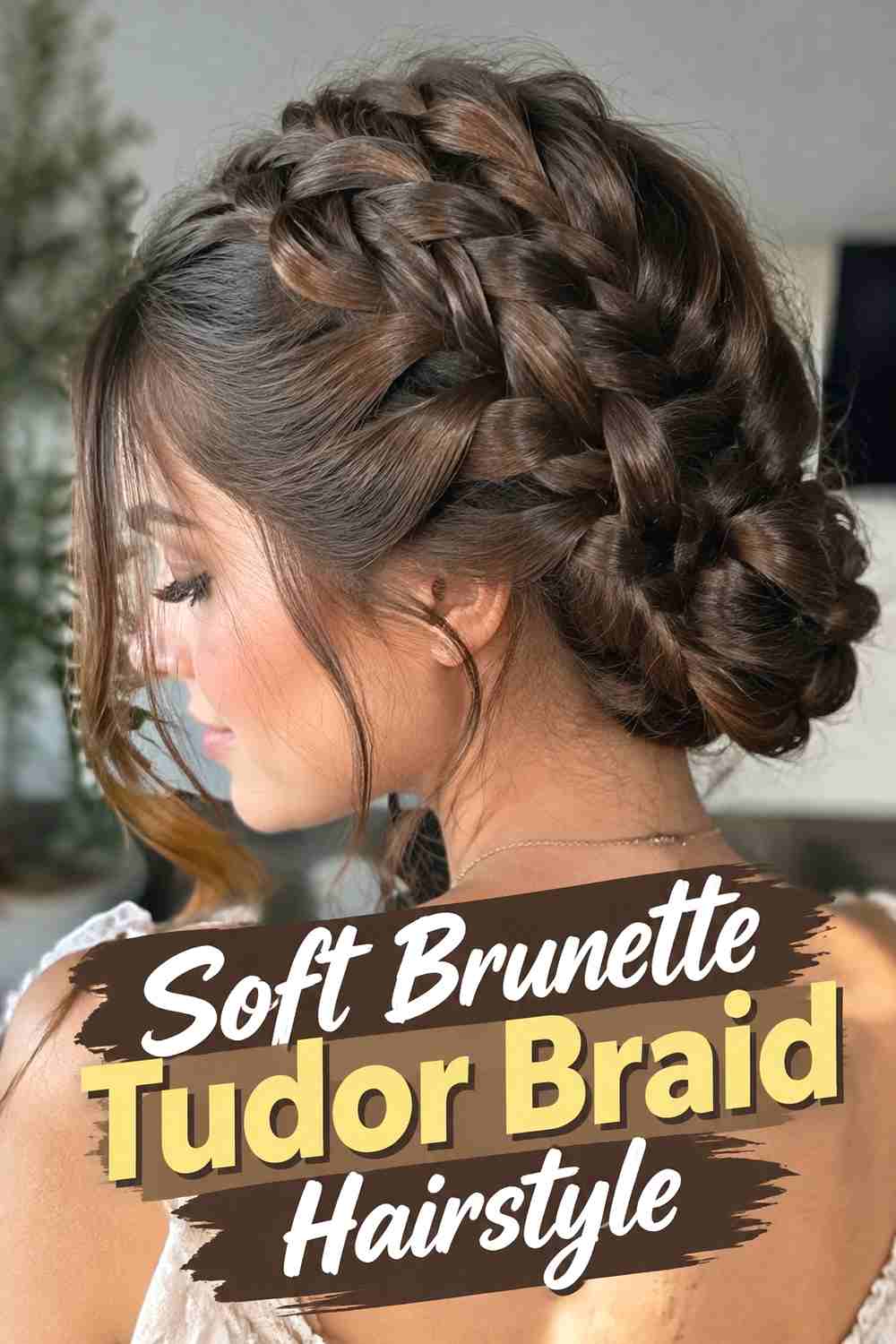
Brunette hair can show Tudor braid structure beautifully when the woven sections are loose enough to catch light along their edges. A soft brown base with natural dimension gives the braid visible depth without requiring accessories. Leave the crown slightly lifted and avoid flattening the roots, then guide the braid around the sides or across the back. The remaining lengths can be gently waved so subtle highlights and lowlights appear as the hair moves. Because darker hair can visually merge into one solid shape, a little separation between braid sections is particularly helpful. Keep the finish polished but not overly glossy so individual strands remain visible and the overall texture still feels romantic.
Why It Works
Dimensional brunette tones create natural shadow within the braid, helping each woven section stand out while preserving an understated finish.
Styling Notes
Loosen the outer edges of the braid slightly after securing it. Small adjustments can improve definition without making the braid oversized.
12. Golden Tudor Braid Hairstyle
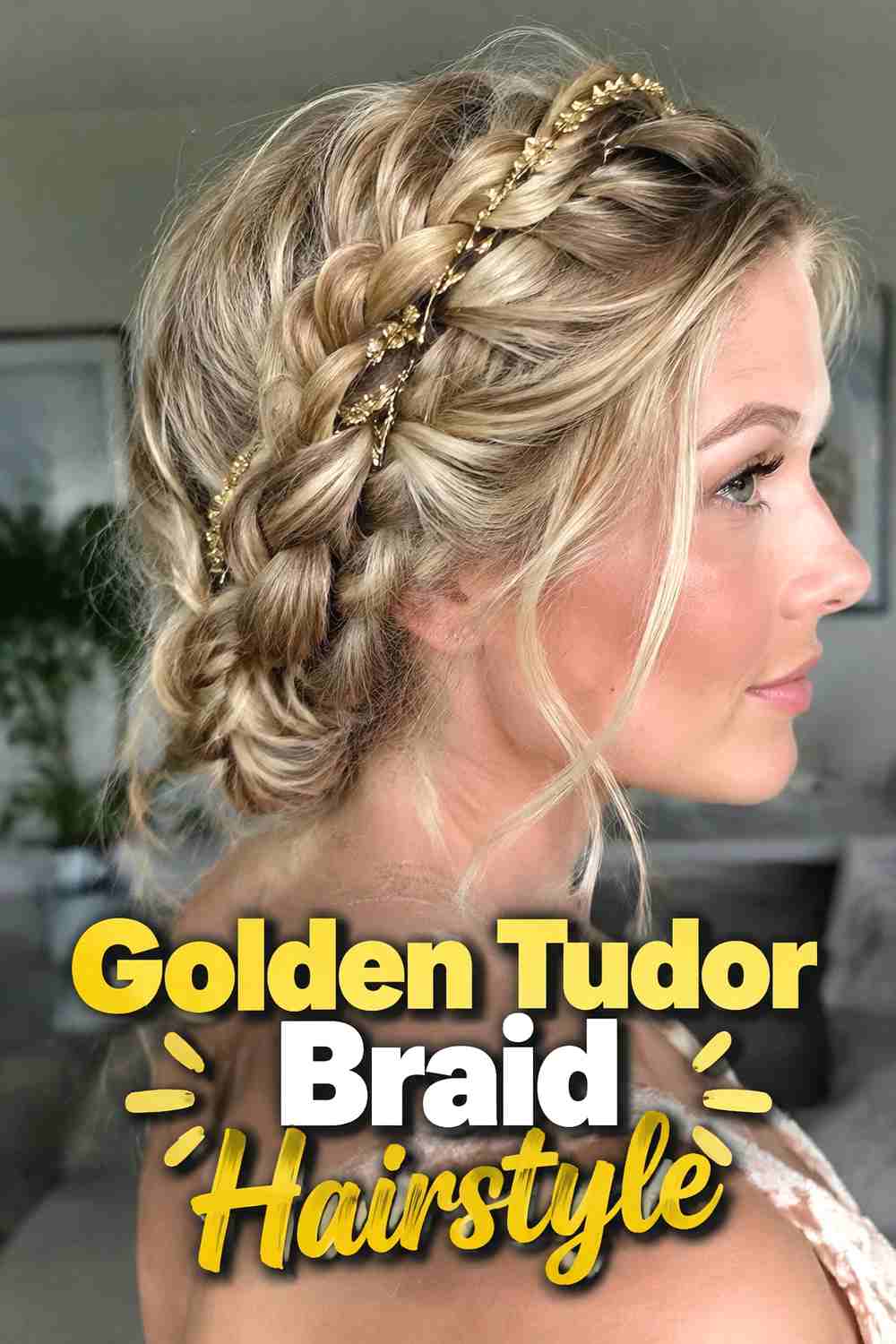
Golden blonde tones give Tudor braids a luminous appearance because highlights naturally emphasize the crossings and raised sections. Keep the crown soft and slightly airy, then form a loose braid that allows different shades of blonde to move through the pattern. Rather than making the braid extremely tight, preserve small pockets of dimension so the texture remains visible. Loose lengths beneath can carry gentle waves that reflect the same warm, romantic mood. This hairstyle looks especially effective in daylight, where the contrast between brighter ribbons of hair and deeper sections becomes clearer. A simple finish works well because the color variation already adds plenty of visual interest.
Styling Notes
Avoid excessive smoothing product before braiding. Too much slip can make lighter hair harder to control and reduce the definition of individual sections.
Best For
This version suits anyone who wants the hair color itself to provide most of the decoration rather than relying on ribbons, pins, or elaborate accessories.
13. Copper Tudor Braid Hairstyle
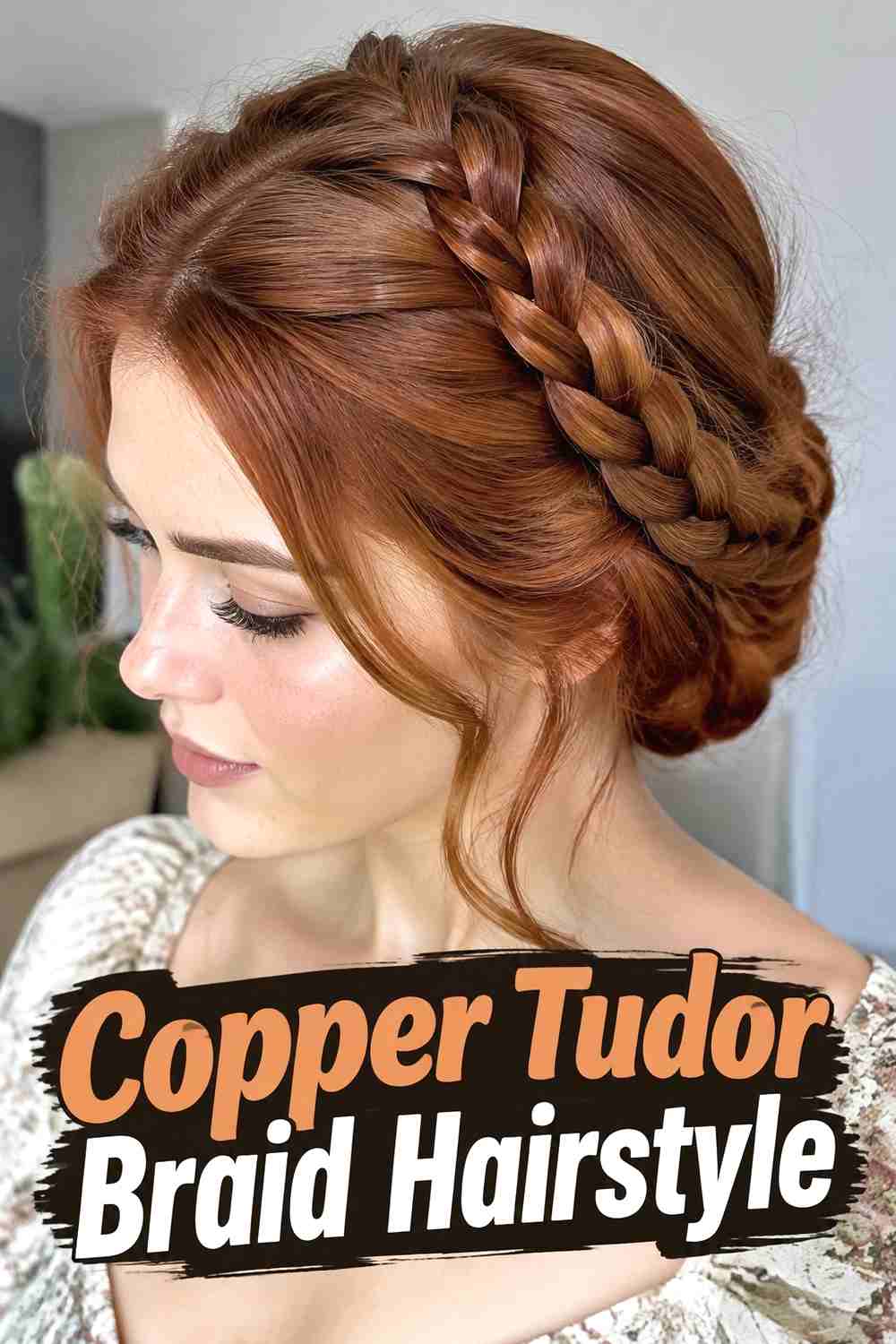
Copper hair adds a richly romantic quality to a Tudor braid, with warm highlights and deeper red tones becoming more noticeable through the woven pattern. A loose crown allows those color shifts to remain visible from the front and sides, while a moderately relaxed braid gives the back plenty of texture. The remaining lengths can fall in broad waves or natural bends for a softer transition. Avoid overly tight styling that compresses the color into a single solid shape. A few wispy strands near the temples can add movement and help the hairstyle feel modern. This variation works beautifully with minimal accessories because the warmth of the hair already gives the style a decorative, painterly effect.
Why It Works
Copper shades naturally reveal dimension as the braid changes direction, creating visible highlights and shadows throughout the woven sections.
Wear & Maintenance
If the hair is color-treated, use moderate heat when adding waves and avoid unnecessary repeated passes through the loose lengths.
14. Fine Hair Tudor Braid Hairstyle
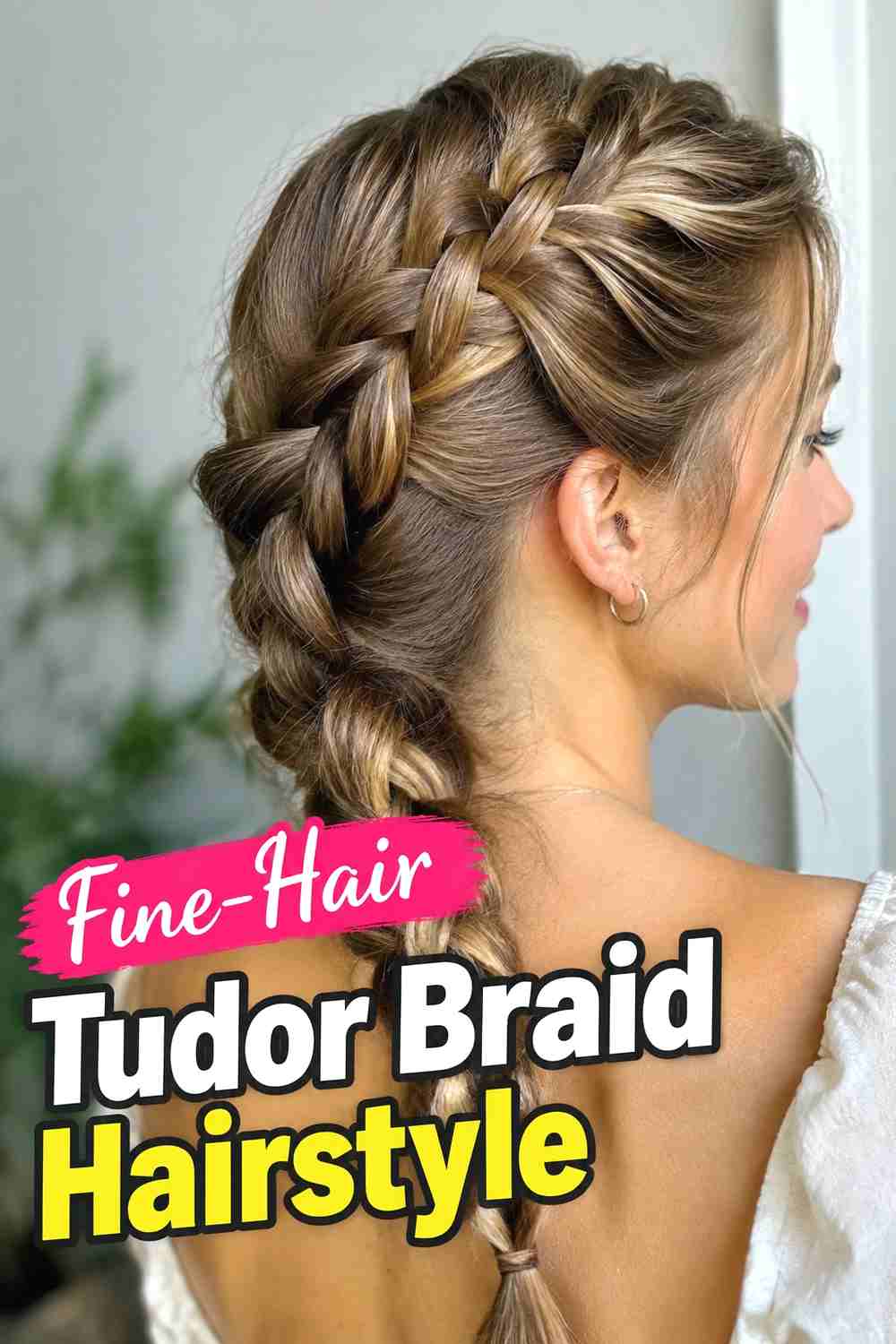
Fine hair can create a delicate Tudor braid when the crown is kept light and the woven sections are gently expanded after securing. Instead of using large amounts of hair, work with smaller side sections and braid them loosely enough to retain visible texture. A little root lift at the crown can add fullness without aggressive backcombing. Leave some lower hair loose so the style does not consume all available density in the braid. Lightweight mousse or texturizing spray can provide grip, but heavy creams and oils may cause the braid to collapse. The finished hairstyle should feel airy and romantic, with enough structure to show the woven detail while preserving natural movement.
Styling Notes
Allow a little texture in the hair before braiding. Extremely silky strands can be harder to secure and may slip out of a loose crown arrangement.
Hair Type & Length
Fine medium-long or long hair works best when the ends have enough density to support both a braid and a loose lower section.
15. Thick Hair Sculpted Tudor Braid Hairstyle
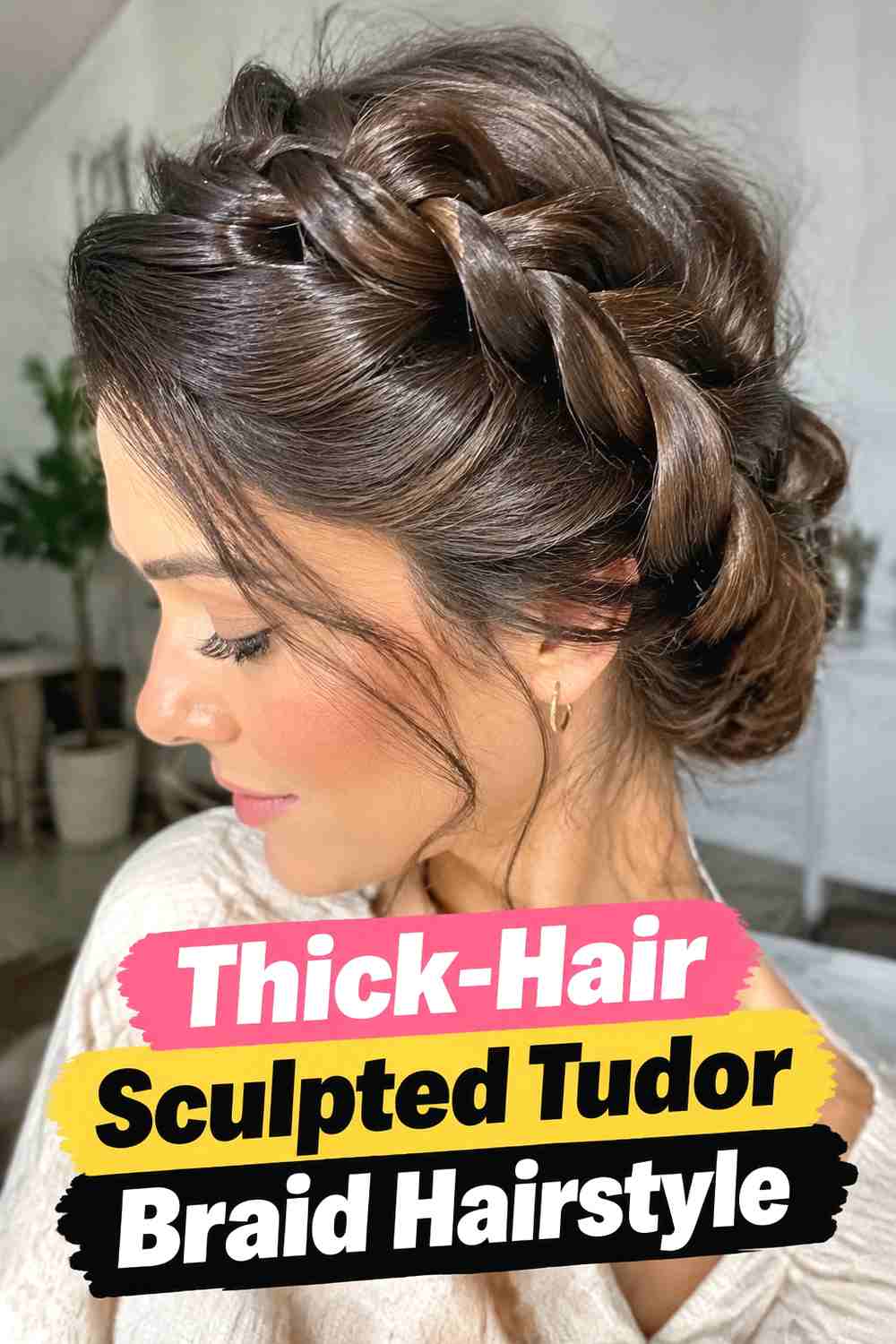
Thick hair gives a Tudor braid impressive shape, but controlling the density keeps the style from becoming overly bulky. Use well-defined sections for the braid while leaving the crown loose enough to prevent a tightly compressed silhouette. A broad braid can travel around the back or sit lower beneath the crown, allowing the upper hair to retain natural fullness. If the hair is very dense, not every strand needs to be included; leaving some lengths loose creates movement and reduces weight. Keep the braid edges visible and structured, then soften selected sections rather than pulling everything apart equally. The result should feel substantial, balanced, and securely anchored without looking heavy.
Hair Type & Length
Dense medium-long and long hair offers enough material for strong braiding while still leaving loose sections around the crown or lower lengths.
Wear & Maintenance
Use sturdy hidden pins and distribute them across several anchor points so the weight of the braid is not concentrated in one area.
16. Tousled Tudor Crown Braid Hairstyle
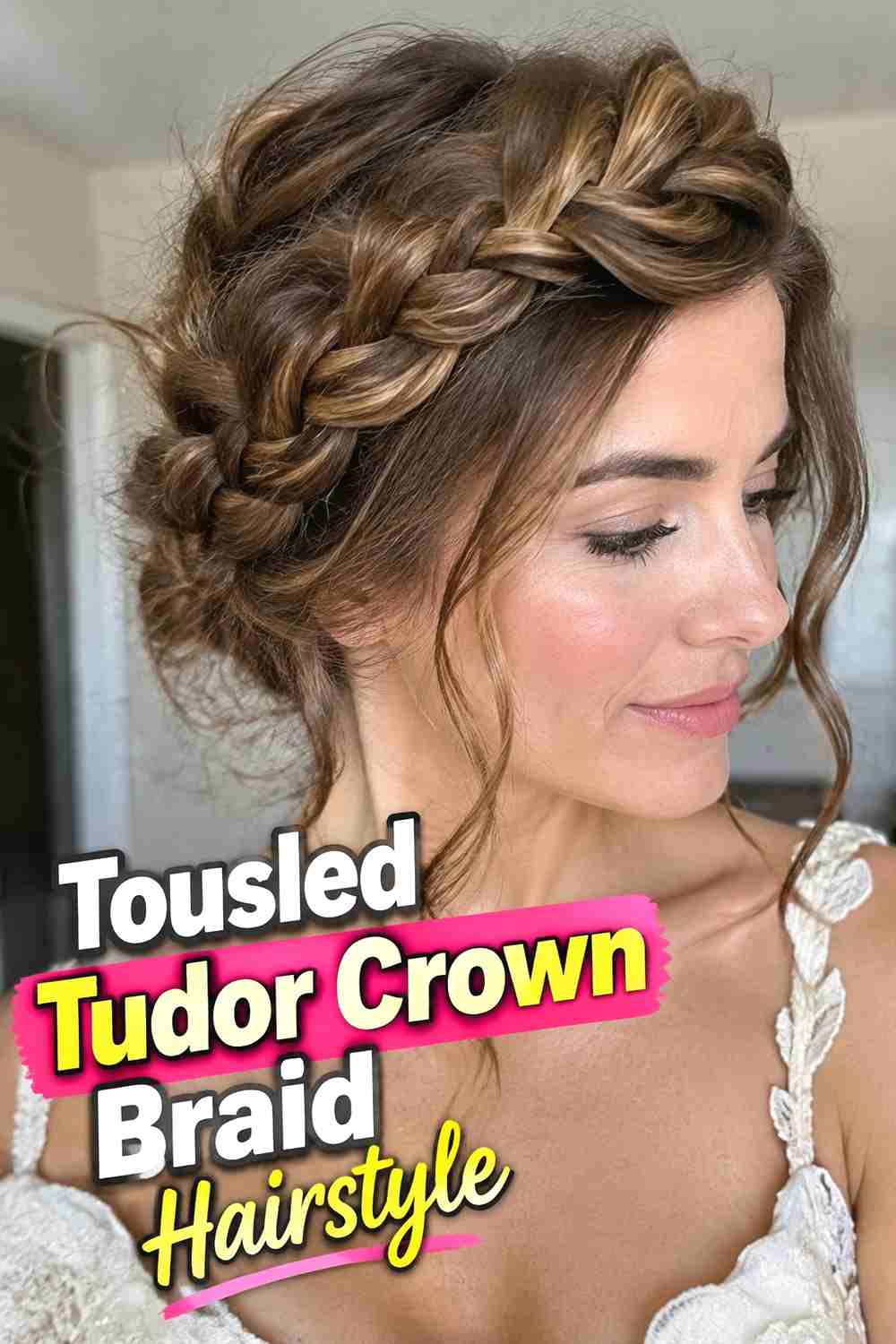
A tousled Tudor crown braid combines recognizable woven structure with a deliberately relaxed surface. The braid can curve around part of the head while loose sections at the crown are gently lifted and allowed to separate naturally. Small flyaways, soft bends, and irregular face-framing pieces contribute to the look rather than needing to be completely smoothed away. The key is keeping the braid itself readable so the hairstyle still appears intentional. Avoid loosening every section to the same degree; variation gives the texture more believable movement. This version is especially useful for casual events, outdoor celebrations, or romantic styling where a perfectly polished finish would feel too formal.
Styling Notes
Finish the braid first, then soften the crown and selected woven sections with your fingertips. Making everything loose at the beginning can weaken the structure.
Best For
Choose this style if you prefer historical-inspired braids with an effortless, lived-in finish rather than crisp symmetry.
17. Low Bun Tudor Braid Hairstyle
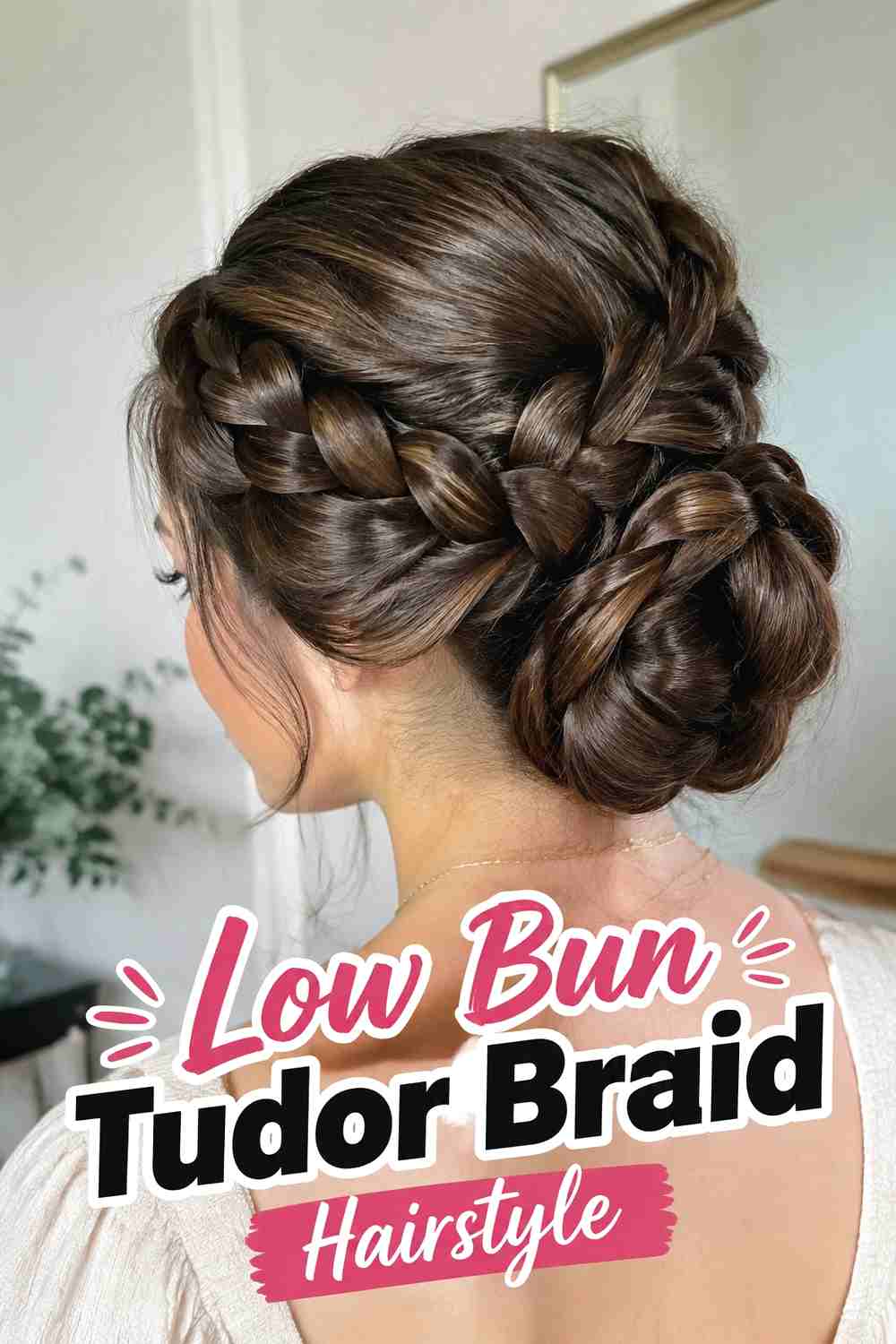
A low bun provides a secure base for Tudor-inspired braiding while a loose crown keeps the overall silhouette soft. Side braids can travel backward and disappear into a gently textured bun at the nape, creating visible detail without making the style too tall. Leave a little fullness above the braid line and allow a few pieces around the face to remain free. The bun itself should connect naturally to the braided sections rather than looking like a separate piece attached at the back. This hairstyle works well for longer events because most of the hair is contained, yet the relaxed crown and subtle flyaways prevent the finish from becoming severe or overly traditional.
Wear & Maintenance
Create a secure internal bun first if your hair is heavy, then arrange the visible braided sections over it for a softer surface.
Pro Tip
Gently loosen the crown only after the bun is stable. This lets you add softness without compromising the main anchor points.
18. Romantic Loose Crown Tudor Braid Hairstyle
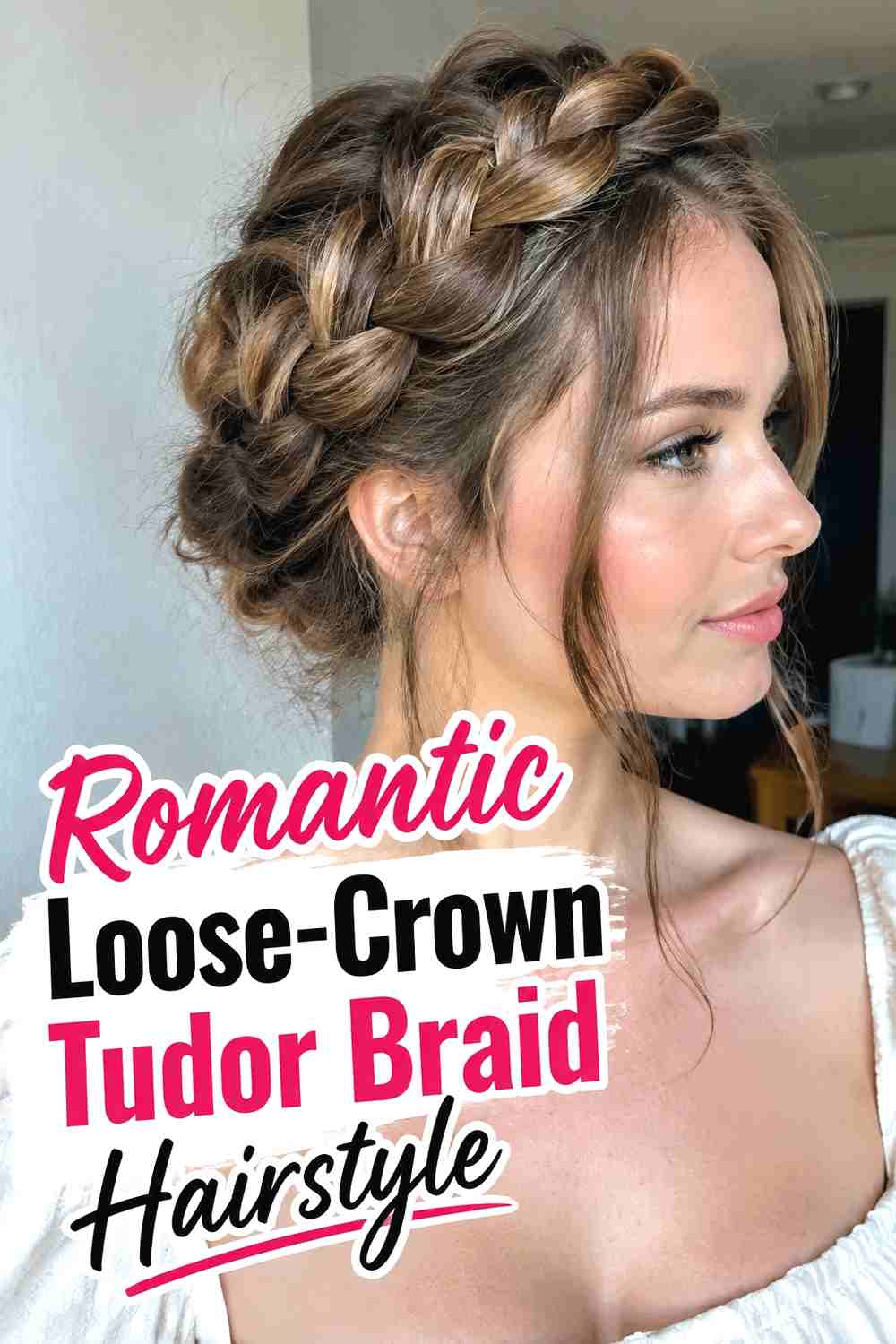
This romantic version brings together the defining elements of the collection: a softly lifted crown, visible braiding, face-framing strands, and relaxed movement. The braid can sweep from both sides toward the back, sitting just below the crown so the upper section retains natural volume. Avoid over-polishing the surface; a few separated strands and subtle flyaways help the style feel contemporary. The lower hair can remain down in broad waves or be partially gathered depending on the occasion. What matters most is the transition from loose crown to structured braid, which should feel gradual rather than sharply divided. The finished look is detailed enough for special events while still feeling soft and wearable.
Styling Notes
Use moderate tension in the braid and adjust the crown afterward in very small sections. Pulling too much hair at once can distort the shape.
Best For
This balanced option works beautifully for weddings, portraits, romantic dinners, themed events, or anyone wanting Tudor influence without a rigid historical finish.
How to Choose the Right Look
Start with your hair length and density. Long hair gives you more room for wrapped, double, and flowing Tudor braids, while medium-long hair works especially well for half-up and face-framing versions. Fine hair usually benefits from smaller braided sections and lightweight texture products, while thick hair may need stronger pins and deliberate sectioning to control weight.
Next, decide how much crown volume you want. A subtle lift creates a polished romantic effect, while a more tousled crown feels relaxed and contemporary. If comfort matters, avoid excessive backcombing or tight braiding around the hairline.
Accessories can change the mood quickly. Ribbon weaving creates a stronger historical reference, pearls add formal detail, and accessory-free braids keep the look understated. For long events, low buns and wrapped braids usually offer more security, while half-up and loose-length styles preserve more movement.
Final Thoughts
Romantic Tudor braids feel most wearable when the crown has softness and the braid is allowed to show natural texture. Choose a version that works with your real length and density, then adjust the volume, accessories, face-framing pieces, and amount of loose hair to suit the occasion.
FAQs
1. What makes a braid look Tudor inspired?
Braids arranged around the sides, crown, or back of the head create the strongest Tudor-inspired effect, especially when combined with soft volume, ribbons, or subtle decorative pins.
2. How do I keep the crown loose without making the hairstyle fall apart?
Secure the braid first, then gently lift small crown sections with your fingertips. This preserves the anchor points while creating controlled softness above them.
3. Can Tudor braid hairstyles work on fine hair?
Yes. Use smaller braid sections, lightweight texture products, and gentle braid expansion. Leaving part of the hair loose can also help preserve the appearance of density.
4. Are Tudor braids suitable for weddings?
They can work beautifully for weddings, especially half-up, pearl-pinned, low-bun, and romantic loose-crown versions. Choose the amount of structure based on comfort and how long the style needs to hold.
5. What accessories look best with romantic Tudor braids?
Narrow ribbons, small pearls, understated decorative pins, and simple clips complement Tudor-inspired braids. Keep accessories restrained so the braid texture and loose crown remain visible.
Save your favorite Tudor braid hairstyle, share the collection for romantic inspiration, and explore more historical-inspired hairstyles with soft modern texture.